Solution
OCPI roaming operations for CPOs and eMSPs
Operate OCPI roaming with clearer partner onboarding, token sync, tariffs, sessions, and CDR readiness for CPO and eMSP workflows.
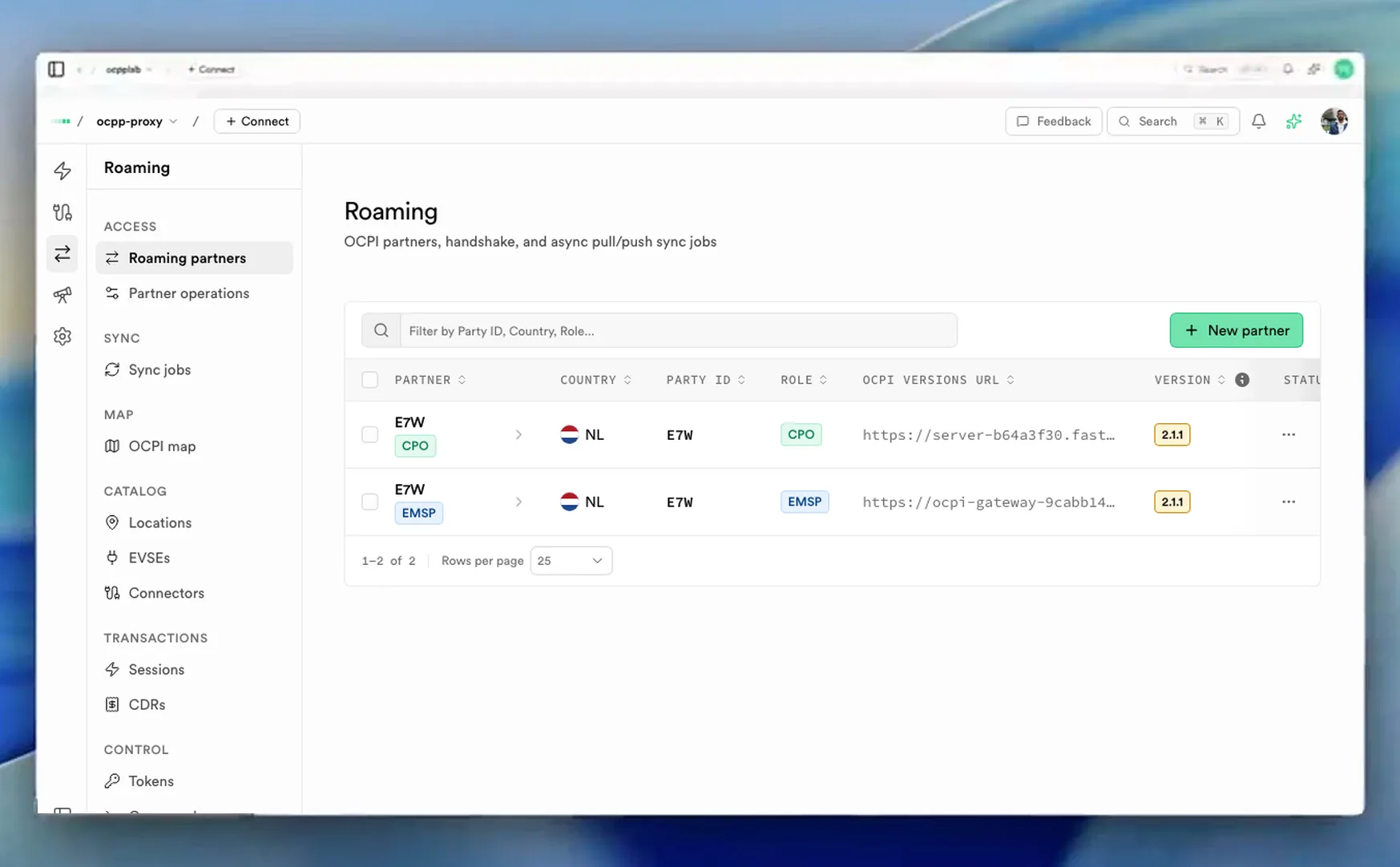
Best for
Operators launching or stabilizing OCPI partnerships where token sync, sessions, tariffs, and CDR handling need stronger operational control.
Audience
CPO roaming teams, eMSP platform leads, and interoperability owners.
Why this solution exists
This solution is for teams that need OCPI to work as an operating layer, not just a checklist item. It keeps credentials, module scope, sync, tariffs, and settlement workflows aligned across production partners.
- Partner onboarding takes too long because module scope and responsibilities stay unclear.
- Token, tariff, session, and CDR flows behave differently across partners.
- Roaming launch depends on too much manual coordination between engineering and operations.
- The team needs a repeatable production process, not only a successful sandbox demo.
What the team gets
- Launch roaming with clearer operational ownership and fewer last-minute gaps.
- Keep location, token, session, and CDR workflows visible across partners.
- Reduce sync and settlement surprises before production traffic scales.
- Move from one-off integrations toward a repeatable roaming operating model.
Continue
Related buying pages
FAQ
Frequently asked questions
Next step
Move from use case into rollout or product evaluation
Qualify fit quickly. Start in ev-cloud to test the product path, or talk to the team if migration, roaming, or multi-backend coexistence needs scoping first.