Solution
Multi-backend EV charging operations
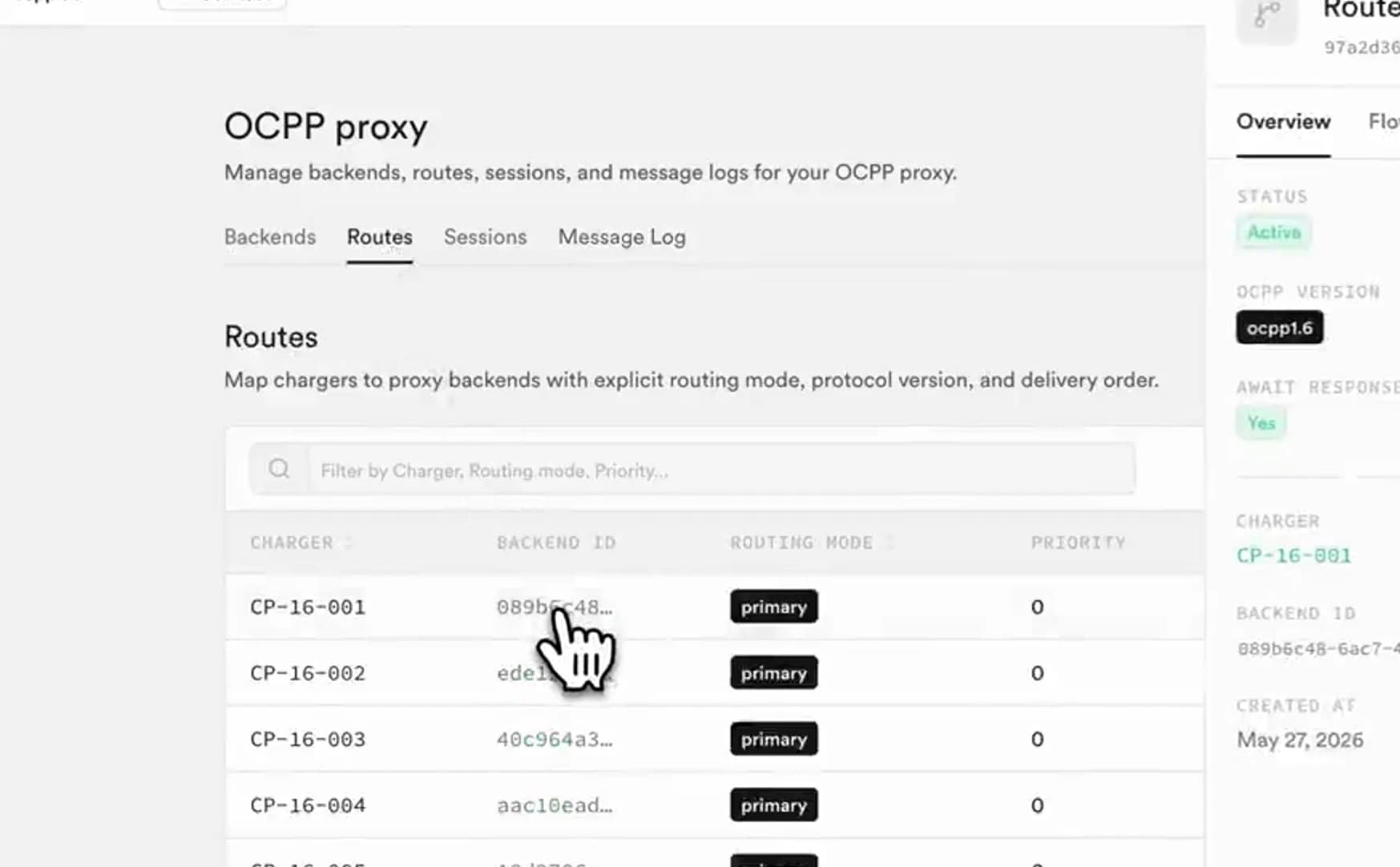
Use ev-cloud to route chargers across multiple backends, preserve data ownership, and keep operations flexible when one platform cannot cover every workflow.
Best for
Operators that need routing flexibility across monitoring, billing, roaming, or migration use cases instead of tying all charger traffic to one platform.
Audience
CPO architecture teams and EV charging platform operators running complex backend environments.
Why this solution exists
This solution is for teams that do not want one vendor relationship to define every charger, workflow, and data path. It supports routing, coexistence, and a cleaner control layer across a mixed operating stack.
- One backend does not cover every operational or commercial workflow cleanly.
- The current architecture makes data access and event ownership too dependent on one vendor.
- Migration and innovation slow down because chargers are tightly coupled to one platform.
- The team needs a stable protocol layer before changing more of the business stack.
What the team gets
- Route chargers more flexibly across existing and future systems.
- Keep raw event and charger data under your control.
- Reduce long-term lock-in without forcing a full rewrite first.
- Create a cleaner operating model for migration, reporting, roaming, and partner workflows.
Continue
Related buying pages
FAQ
Frequently asked questions
Next step
Move from use case into rollout or product evaluation
Qualify fit quickly. Start in ev-cloud to test the product path, or talk to the team if migration, roaming, or multi-backend coexistence needs scoping first.